
The Undeclared Superpower
How China built the architecture of a second superpower without ever claiming the title — and why the West has spent twenty-five years calling it a trade problem.

After the Cold War ended in 1991 and the Soviet Union dissolved, a consensus formed in Western capitals about how to manage China’s growing economic power. It was called engagement: the theory that integrating China into the global trading system — admitting it to the World Trade Organization in 2001, encouraging foreign investment, allowing supply chains to anchor themselves to Chinese manufacturing — would gradually produce a China that was prosperous, stable, and increasingly aligned with the rules-based international order. The theory was not naive. It was an attempt to solve a genuine strategic problem: how to incorporate a country of 1.4 billion people, governed by a Communist Party with no intention of liberalizing politically, into a system designed around liberal democratic norms. The solution chosen was to make the economic relationship too valuable to disrupt, on both sides, while waiting for prosperity to generate its own political pressures. What the theory did not adequately account for was the possibility that China would use the decades of engagement to build something that made the theory obsolete.
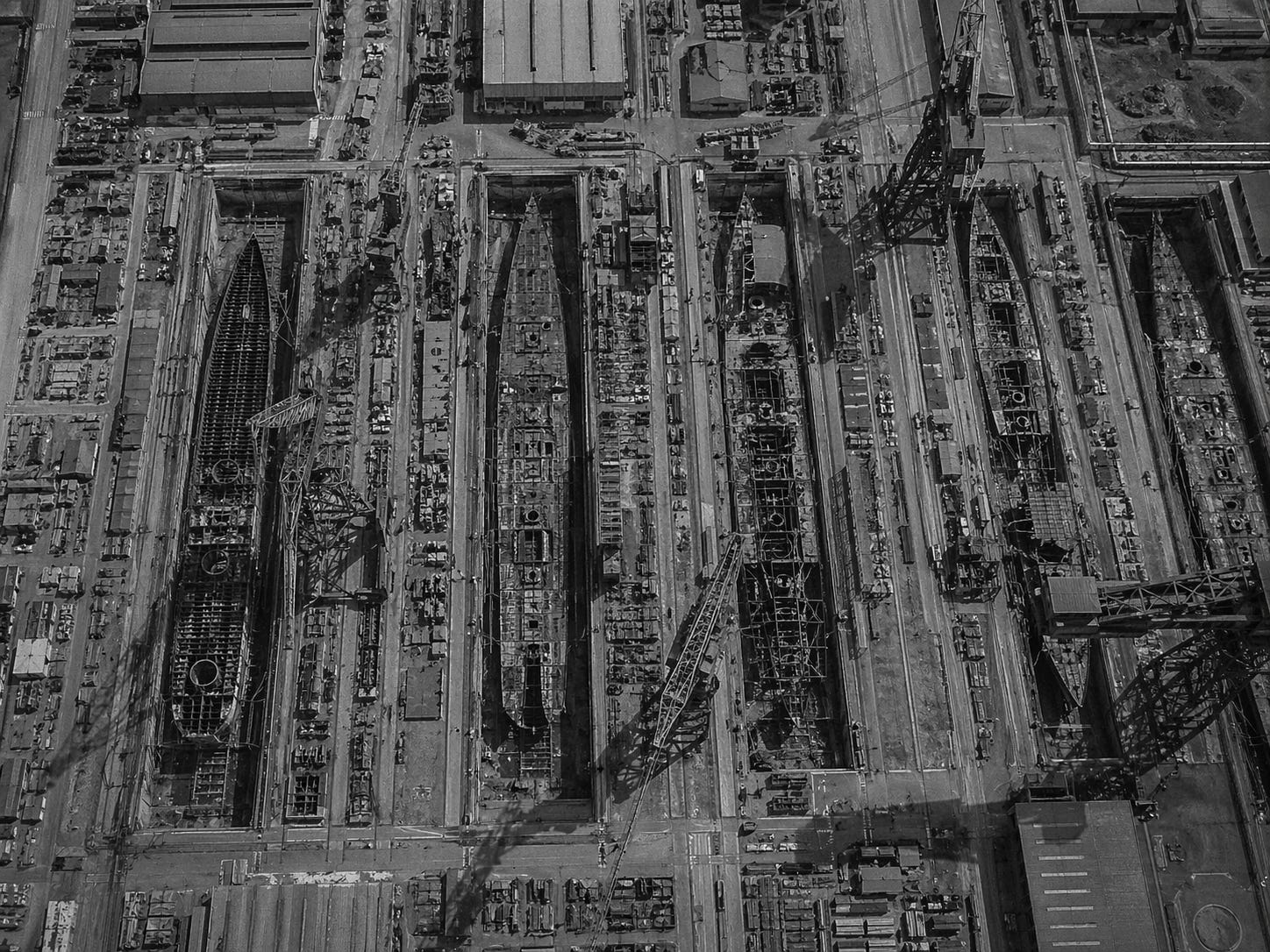
The People’s Republic of China is not rising. It has risen. The confusion between these two statements is not semantic — it is the central failure of Western strategic analysis over the past two decades. While Washington managed the relationship as a trade dispute and Brussels drafted competition regulations, Beijing built a blue-water navy capable of projecting power across the Pacific and Indian Oceans, more than doubled its nuclear arsenal, and installed the physical infrastructure of global military reach across four continents. None of this was hidden. All of it was documented — in annual Pentagon reports, academic studies, satellite imagery, and public statements by Chinese officials. The reports were noted at press briefings and forgotten by the following week. The oversight is not a failure of intelligence. It is a failure of attention.
The concept that best describes what China has built is not ‘aggression.’ It is ‘foreclosure.’ Aggression requires the use of force. Foreclosure requires only the credible capacity to make force too costly to apply — closing off options before an adversary can exercise them. China does not need to invade Taiwan to foreclose the question of Taiwan’s independence. It needs to make US intervention in a Taiwan contingency expensive enough that Washington calculates the cost against the benefit and finds the arithmetic unfavorable. That calculation requires nuclear parity at ranges that threaten the American homeland, naval dominance in the Western Pacific, and control of the one asset whose disruption would be catastrophic for any intervening party regardless of whether a single shot was fired. That asset is a semiconductor factory in Taiwan.
Taiwan Semiconductor Manufacturing Company — TSMC — produces approximately 90 percent of the world’s most advanced semiconductors. These are chips manufactured at the 7-nanometer scale and below: components so small and complex that only two or three facilities on earth can produce them. They power the F-35 fighter jet, the processors in AI systems, the guidance computers in precision munitions, and the communications infrastructure of every major military alliance. The CHIPS and Science Act, signed by President Biden in August 2022, allocated $52.7 billion to begin rebuilding domestic US semiconductor capacity — $39 billion for manufacturing incentives, $11 billion for research and development, $2 billion for legacy chips. TSMC broke ground on an Arizona facility. The timeline for meaningful independence from Taiwanese production, according to industry analysts, runs to decades, not years. China does not need to destroy TSMC to make this leverage real. It only needs to credibly threaten access to it. A Taiwan contingency that lasted a matter of weeks would be sufficient to cause cascading failures in weapons systems, communications infrastructure, and civilian technology supply chains across the Western alliance. China does not need to win a war. It needs to make starting one unthinkable.
The military architecture China has built is best understood as an instrument of that foreclosure. Start with the nuclear numbers, because they are precise and almost never cited together. China’s nuclear arsenal stood at approximately 260 warheads in 2015, according to the Federation of American Scientists’ Nuclear Notebook — the authoritative global count maintained by the Bulletin of the Atomic Scientists. By mid-2024, the Pentagon confirmed the figure had exceeded 600 operational warheads — more than doubling in less than a decade, with the pace of expansion accelerating. The US intelligence community projects the arsenal will exceed 1,000 warheads by 2030, many to be deployed at higher readiness levels than historically. Intercontinental ballistic missiles capable of reaching the continental United States numbered roughly 60 to 65 in 2016. By 2024, that figure had grown to approximately 240.
On September 25, 2024, China’s People’s Liberation Army Rocket Force launched an intercontinental ballistic missile from Hainan Island — the first full-trajectory test into the Pacific in 44 years, since 1980. The missile traveled approximately 11,700 kilometers before landing in the open ocean, carrying a dummy warhead. China gave some countries advance notice of the test. It did not give French Polynesia enough. The missile landed less than 700 kilometers from its exclusive economic zone. The president of French Polynesia described his country as a grain of rice in the ocean between two powers gauging each other. He was not wrong about the geometry. Leif-Eric Easley, a professor of international studies at Ewha University in Seoul, explained the test’s actual message: it was Beijing’s way of telling Washington that direct intervention in a conflict across the Taiwan Strait would involve the American homeland being vulnerable to nuclear attack. The Chinese government labeled it a routine annual training exercise.
The naval construction program follows the same logic and timeline. In late 2021, China’s navy surpassed the United States in total warship count, becoming the largest naval force in the world by hull — more than 370 vessels. On November 5, 2025, China commissioned the Fujian, its third aircraft carrier and its most advanced: 80,000 tons of displacement, electromagnetic catapults capable of launching heavier aircraft than the steam systems on its earlier carriers, fifth-generation J-35 stealth fighters, and KJ-600 airborne early warning aircraft. It was the first Chinese carrier designed and built entirely without Soviet inheritance or transitional compromise — a wholly indigenous design. The Pentagon’s December 2025 report to Congress projects that China aims to field nine carrier strike groups by 2035. The United States is congressionally mandated to maintain eleven. A nine-carrier Chinese fleet, positioned simultaneously in the Western Pacific and the Indian Ocean, would give Beijing the ability to contest US naval access to the Taiwan Strait while maintaining pressure on Taiwan itself. Not aggression. Foreclosure.
The Belt and Road Initiative — China’s infrastructure investment program across more than 150 countries, launched in 2013 — is rarely analyzed as a military program because it is formally an economic one. But it has produced the logistics network that gives Chinese military capabilities their global reach. Chinese state-sponsored firms have secured operating rights or significant ownership stakes in more than 95 port facilities worldwide, from the Mediterranean to the Pacific to the Indian Ocean. The only official overseas military base remains Djibouti, opened in 2017 at a location eight kilometers from a US military installation, positioned at the entrance to the Red Sea. But the US Naval War College has noted explicitly that the port network functions as dual-use architecture: commercial infrastructure that can support People’s Liberation Army deployments when needed. China’s own State Council described the strategic objective in a 2019 white paper as developing far seas forces — military capabilities that operate well beyond China’s coastline. By that timetable and by the assessment of the US-China Economic and Security Review Commission, the capability window is now open.
The West has spent twenty-five years describing this program as a trade problem because describing it accurately would require answering questions that the engagement strategy was not designed to ask. A trade problem has trade solutions: tariffs, market access negotiations, WTO dispute panels. A peer military competitor with nuclear parity, the largest navy by hull count, a global port network, and the factory that makes your most advanced weapons components does not. The Soviet Union presented the same fundamental challenge in 1949 and produced a forty-year institutional response: NATO, forward-deployed forces across Europe, nuclear doctrine, arms control frameworks, and permanent strategic competition explicitly acknowledged and planned for at every level of government. The equivalent institutional response to what China has built — quietly, methodically, inside the language of economic development and peaceful rise — has not yet been named, let alone constructed.
China has more than 600 nuclear warheads today and 1,000 on its 2030 trajectory, nine aircraft carriers planned, a global port network functioning as latent military infrastructure, the manufacturing base that produces most of the world’s advanced technology, and the factory where the semiconductors that power Western weapons systems are made. It achieved all of this during a period when four consecutive US administrations described it primarily as a trading partner with concerning tendencies. The architecture is complete. The foreclosure is already partially in effect — not because China has acted, but because the credible threat of action is enough to alter calculations. What the next decade will determine is not whether China has become a peer competitor. It has. The question is whether the West develops the language, the institutions, and the political will to name what has already happened — before naming it is the only option left.